
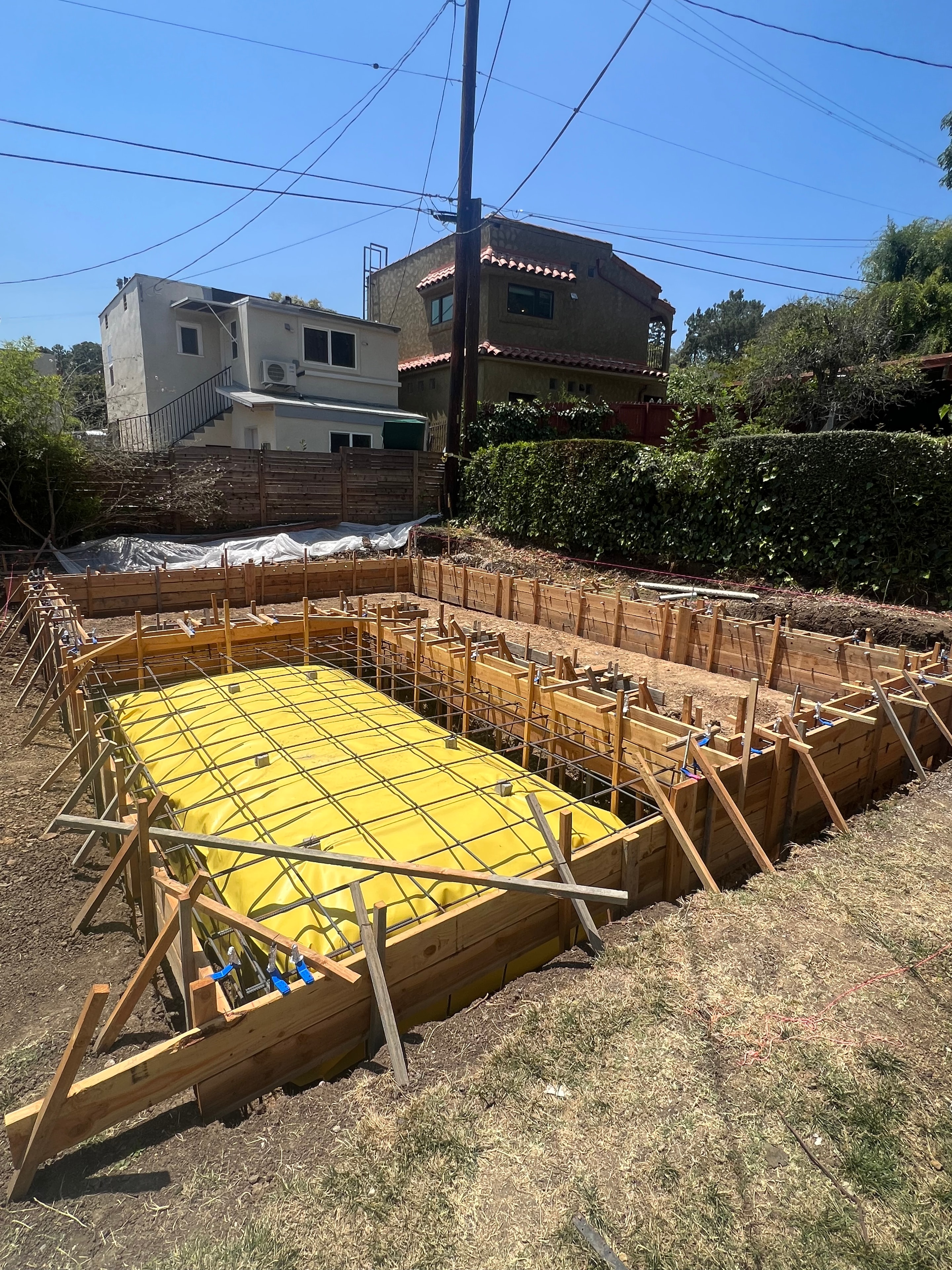
ADUs — accessory dwelling units — are being built all over Los Angeles County right now. State law has made them easier to permit, and homeowners are taking advantage of the opportunity to add rental income, house family members, or simply increase property value. But before any framing goes up, before any walls are built, there is one step that determines whether the entire structure will stand the test of time: the foundation.
At Concrete Etc., Inc., we've poured foundations for ADUs throughout Santa Clarita, the San Fernando Valley, Pasadena, and across Los Angeles County. Here's what every homeowner should understand before the first shovel hits the ground.
Why the ADU Foundation Is Different from a Standard Slab
A standard patio slab and an ADU foundation may look similar on the surface, but they are engineered to entirely different standards. An ADU is a habitable structure — it must meet the same building code requirements as the main house. That means:
- Engineered foundation plans stamped by a licensed structural engineer
- Soil report (geotechnical report) in many jurisdictions, especially hillside lots
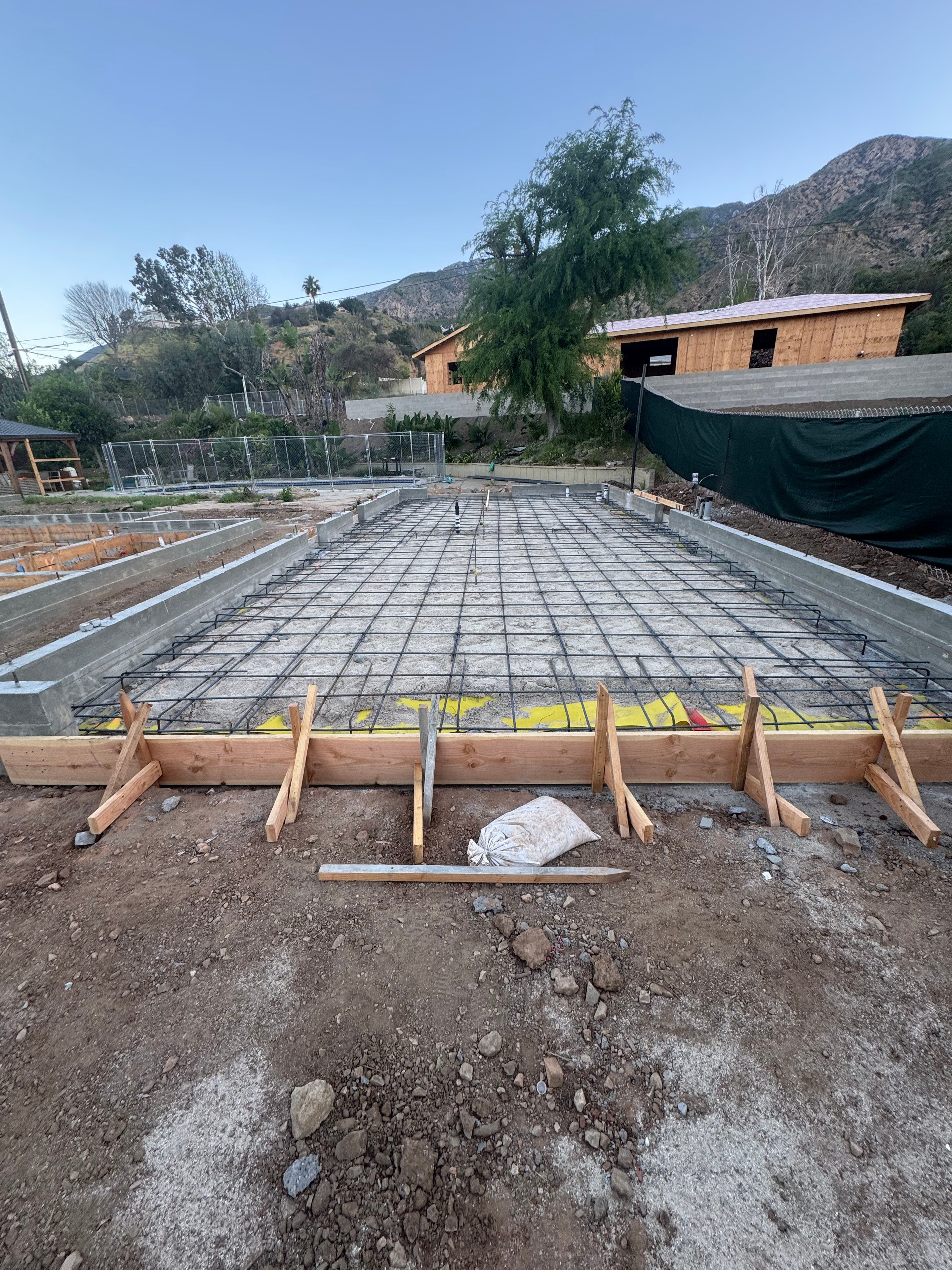
- Rebar sizing and spacing per structural drawings — not just wire mesh
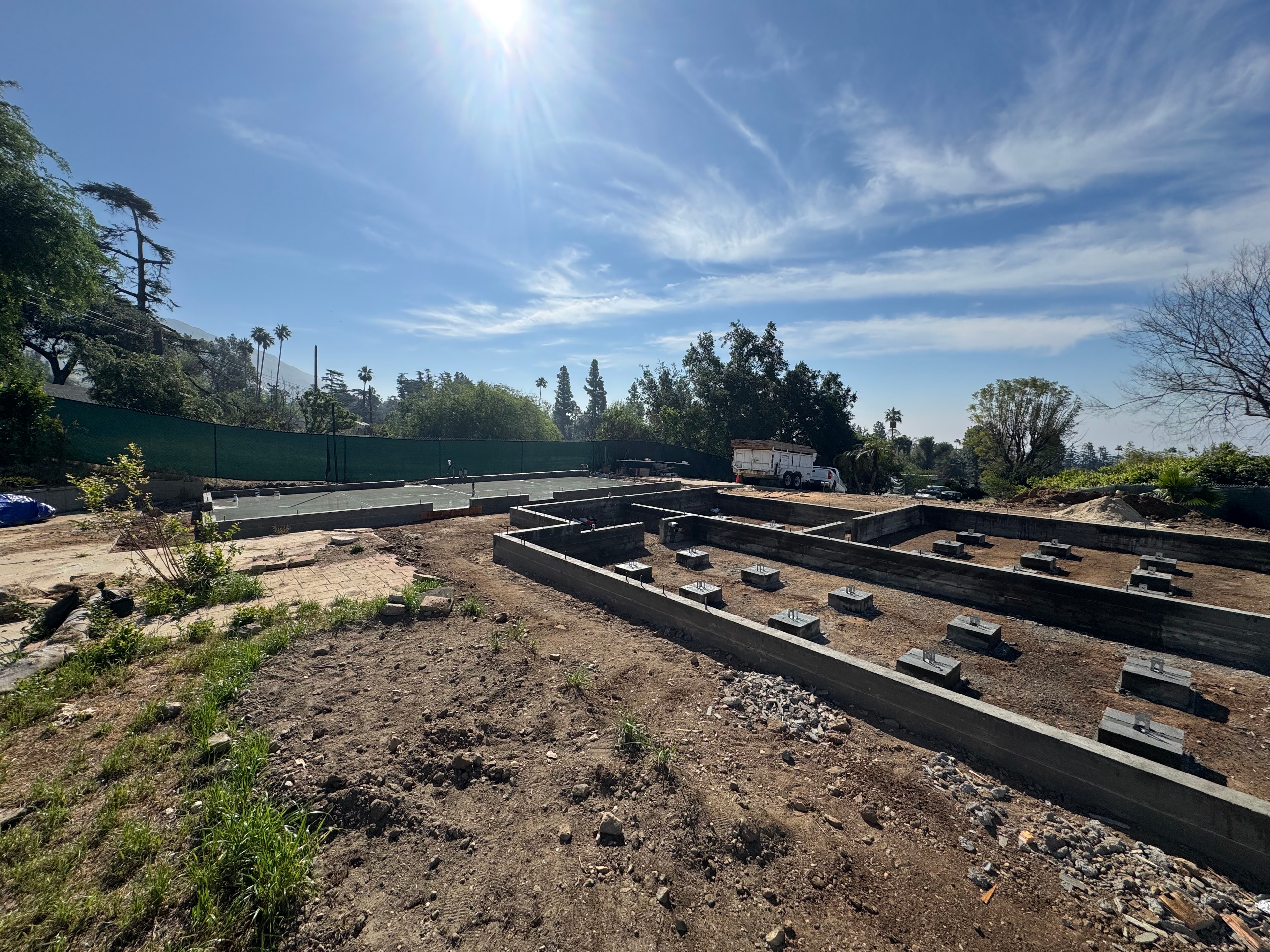
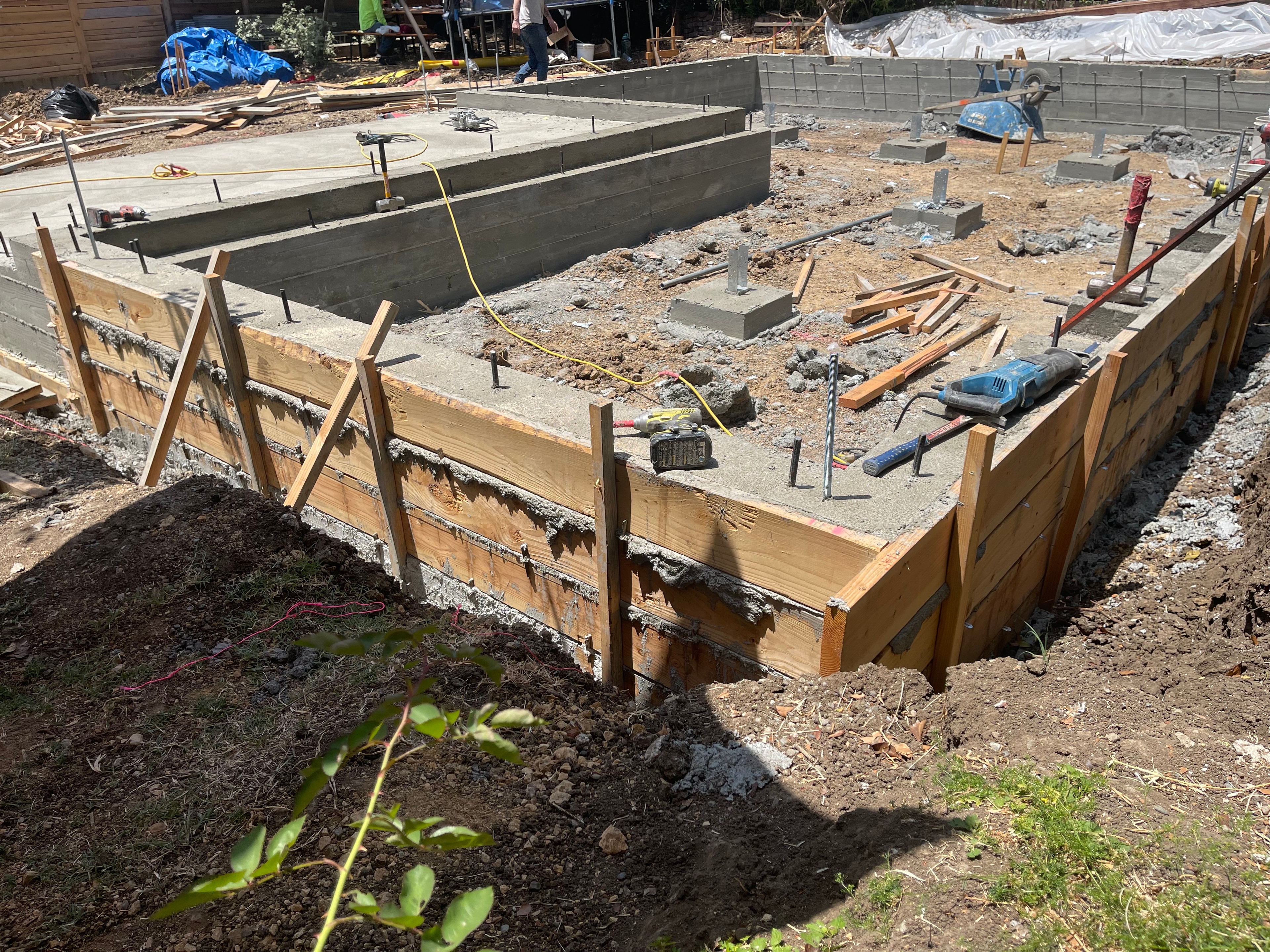
- Anchor bolt placement for shear wall attachment
- Minimum slab thickness (typically 4–6 inches for slab-on-grade, more for raised)
- Proper drainage and waterproofing, especially for raised foundations
- Inspections at multiple stages: pre-pour, rebar, and final
A contractor who pours flatwork and driveways but has never built a structural foundation for a habitable unit is not the right choice for an ADU. The stakes — and the liability — are different.
ADU Foundation Types: Which One Is Right for Your Lot?
The right foundation type depends on your soil conditions, lot topography, local jurisdiction requirements, and the ADU design itself. Here are the most common options we install:
Slab-on-Grade
The most common and cost-effective option for flat lots with stable soil. A single reinforced concrete slab is poured directly on prepared, compacted ground. Requires proper vapor barrier and rebar per structural plans.
Raised Perimeter Foundation
Concrete stem walls with a crawl space below. Required on many hillside lots and older neighborhoods. Provides access to plumbing and electrical, and keeps the structure above grade for drainage.
Continuous Footing with Slab
A perimeter footing poured below grade with a slab poured on top. Common for detached ADUs where the structure needs a defined perimeter load path. Excellent for two-story ADUs.
Pier and Grade Beam
Used on steep hillside lots or expansive soils. Concrete piers are drilled deep into stable soil, connected by a grade beam. More expensive but necessary when the ground cannot support a conventional spread footing.
Permits, Inspections, and What to Expect
Every ADU foundation in Los Angeles County requires a building permit. The permit process typically involves:
- Submission of site plan, foundation plan, and structural drawings
- Plan check review by the local building department (City of LA, County, or incorporated city)
- Permit issuance before any work begins
- Inspection at the footing/rebar stage — before concrete is poured
- Final inspection after the foundation is complete
We work with homeowners and their general contractors or architects to coordinate the foundation scope. We do not pull the overall ADU permit — that is typically the GC's or owner-builder's responsibility — but we coordinate our work to align with the inspection schedule and structural drawings.
Working with a GC or Owner-Builder?
We regularly work as the concrete subcontractor on ADU projects where a general contractor or owner-builder is managing the overall permit. We coordinate directly with your structural engineer and inspector to make sure the foundation passes the first time.
What Affects ADU Foundation Cost in Los Angeles County?
ADU foundation pricing varies significantly based on the factors below. Every project is different — contact us to schedule an onsite consultation and we'll provide a detailed proposal based on your specific site and structural plans.
Foundation Type
Slab-on-grade is the most affordable. Raised perimeter and pier-and-grade-beam foundations involve more labor, forming, and materials.
ADU Size
A 400 sq ft studio ADU requires significantly less concrete and labor than a 1,200 sq ft two-bedroom unit.
Lot Conditions
Hillside lots, expansive soils, high water tables, and existing underground utilities all add complexity and cost.
Structural Requirements
Seismic zone requirements in LA County often call for more rebar, deeper footings, and specific anchor bolt patterns than other regions.
Access
Tight rear yards or limited truck access can require pumping concrete rather than direct chute pours — adding to cost.
Existing Conditions
Demolishing an old slab, removing tree roots, or dealing with fill soil adds time and cost before the new foundation can be poured.
ADU Foundation & Concrete Projects — Los Angeles County
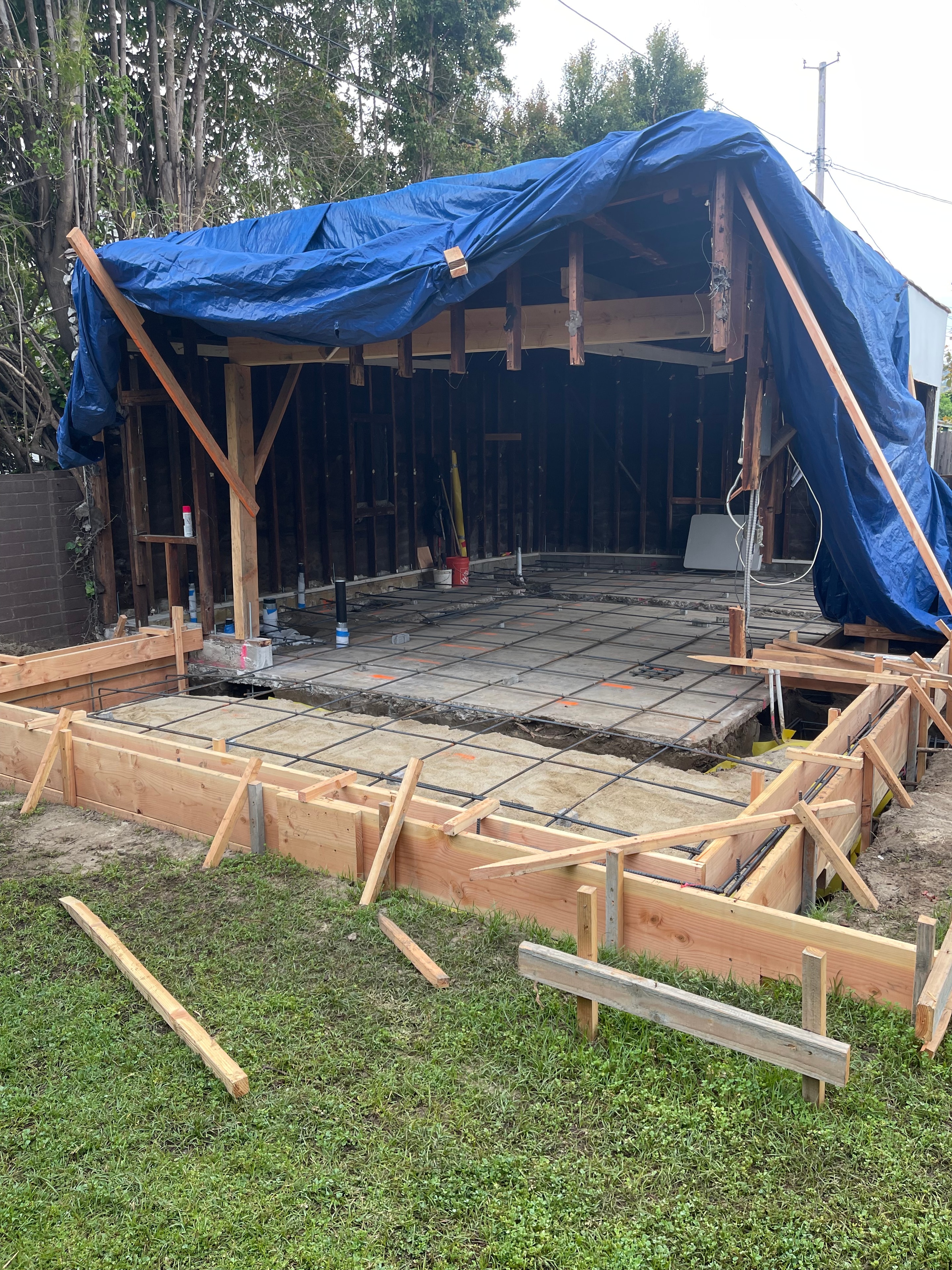
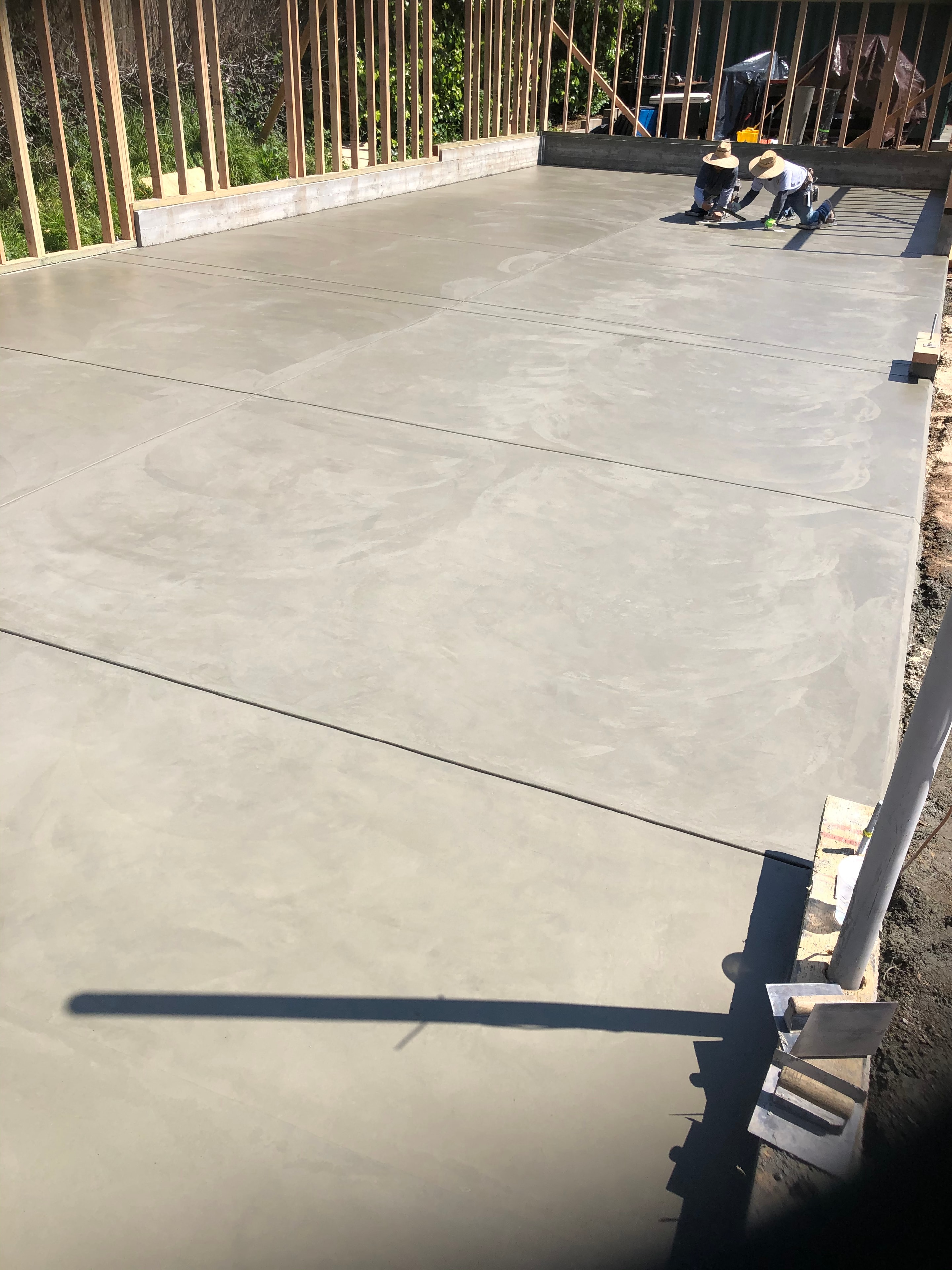
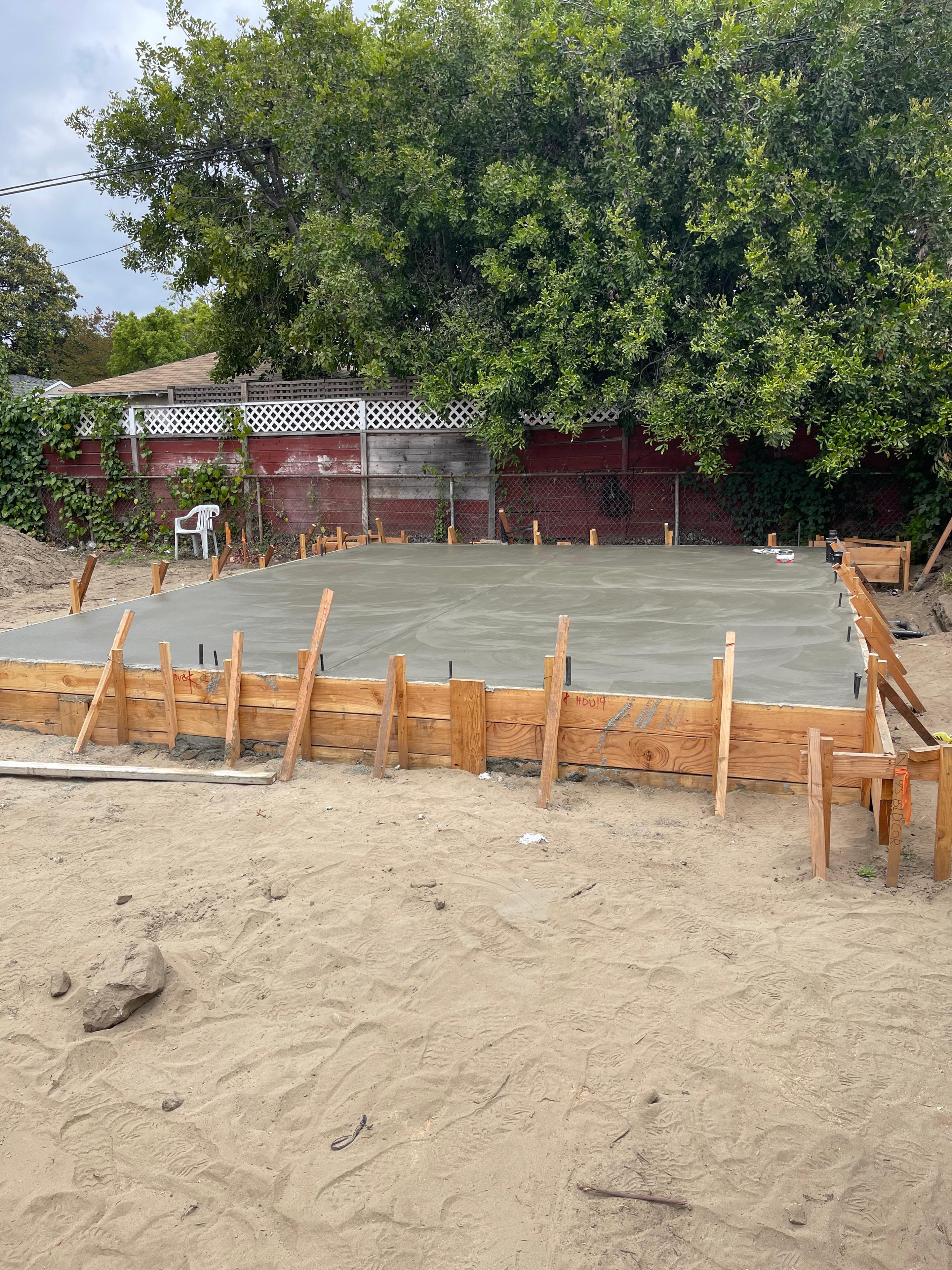
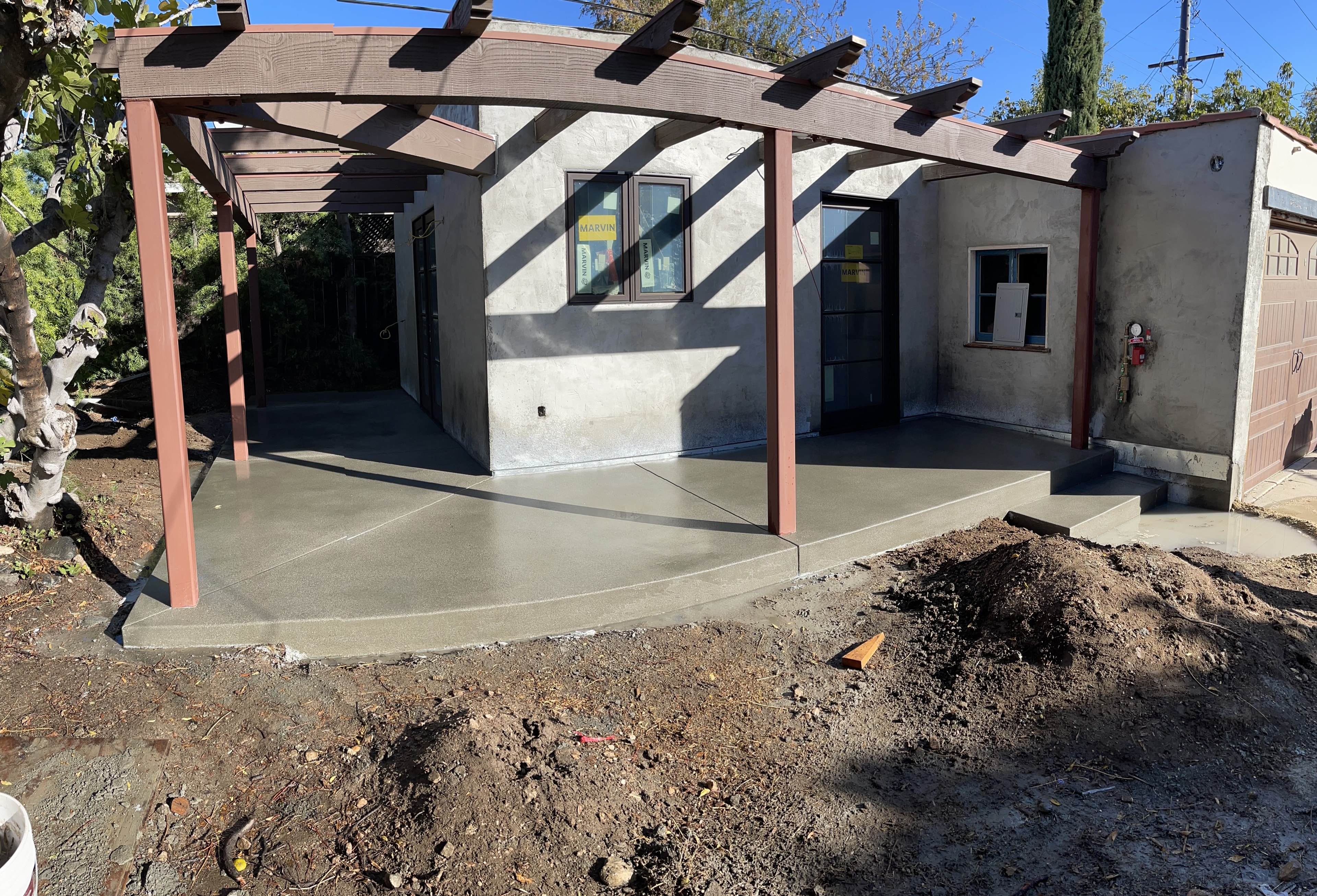
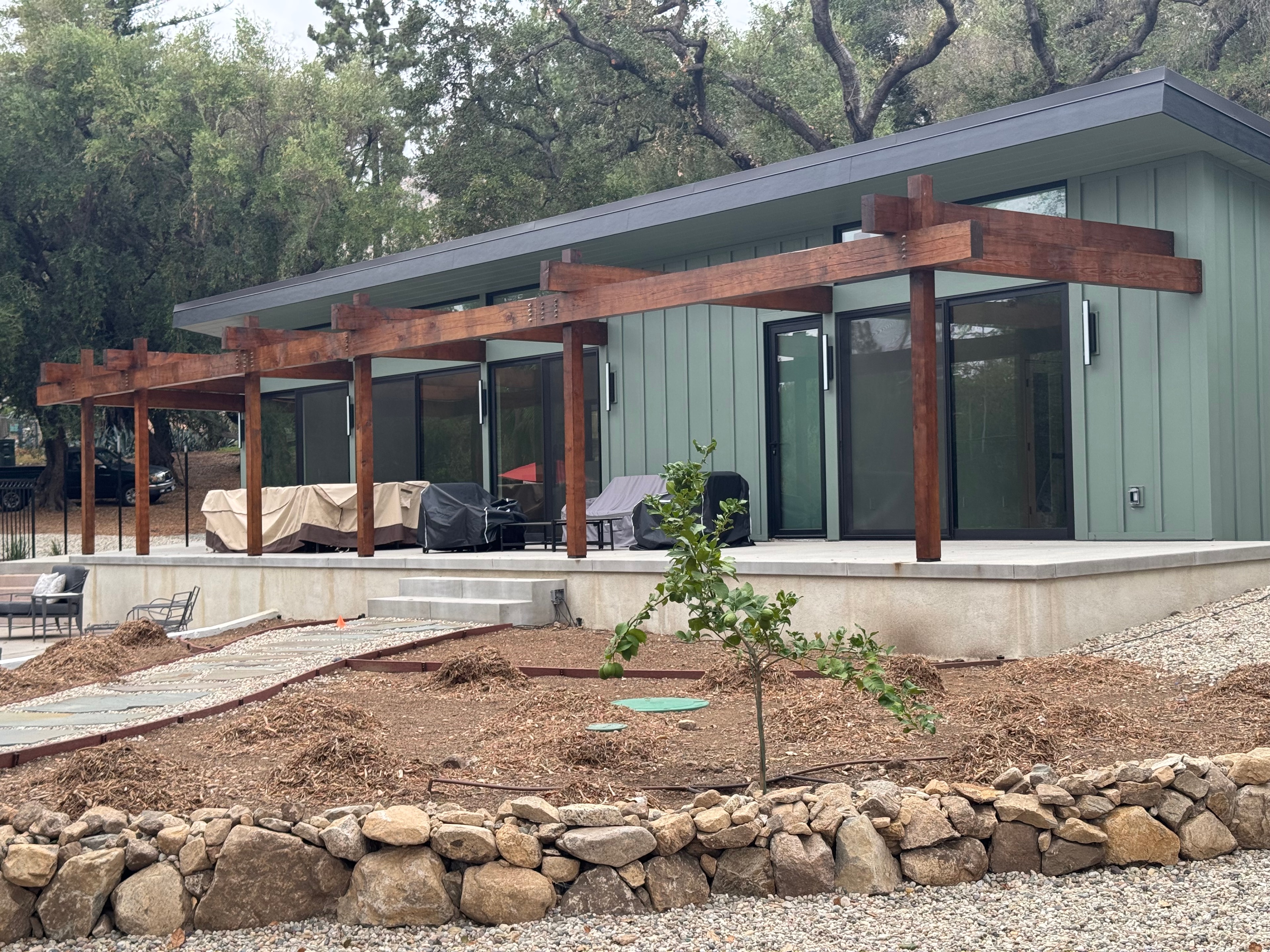
A sample of ADU foundation and concrete work completed by Concrete Etc., Inc. across Los Angeles County — from stem wall formwork and slab pours to completed units with attached hardscape.
Why the Foundation Contractor You Choose Matters
The ADU boom in California has brought a lot of new contractors into the foundation space — some of whom have no business being there. A foundation failure on a habitable structure is not a cosmetic problem. It is a structural, financial, and legal problem that can affect your property for decades.
When you hire Concrete Etc., Inc. for your ADU foundation, you get:
- CSLB License #895899 — B (General Building), C8 (Concrete), and C29 (Masonry)
- Experience with structural foundation work across Los Angeles County since 2007
- Coordination with your structural engineer and building inspector
- Concrete mix design appropriate for the structural load requirements
- Proper rebar placement, spacing, and cover per structural drawings
- Clean, professional work that passes inspection the first time
ADU Foundation Work Throughout Los Angeles County
We serve homeowners and contractors throughout the region. Recent ADU foundation work has included projects in:
Related Reading
- ADU Contractor Los Angeles County — Service Overview →
- Concrete Foundation Contractor — Los Angeles County →
- Hillside & Caisson Foundation Contractor — Los Angeles →
- Why Does Concrete Crack? Normal vs. Warning Sign →
- The Importance of a Strong Foundation →
- Rebuilding Altadena One Foundation at a Time →
- Concrete Underpinning in Los Angeles →
- Altadena Foundation Rebuilds After the Eaton Fire →
- Pacific Palisades Foundation: Hillside & Coastal Lots →
Planning an ADU in Los Angeles County?
We'll review your structural plans and provide a detailed foundation proposal. Licensed, experienced, and ready to work with your team.
Schedule an Onsite ConsultationServing Los Angeles County
Full service areas: San Fernando Valley, San Gabriel Valley, Los Angeles County