
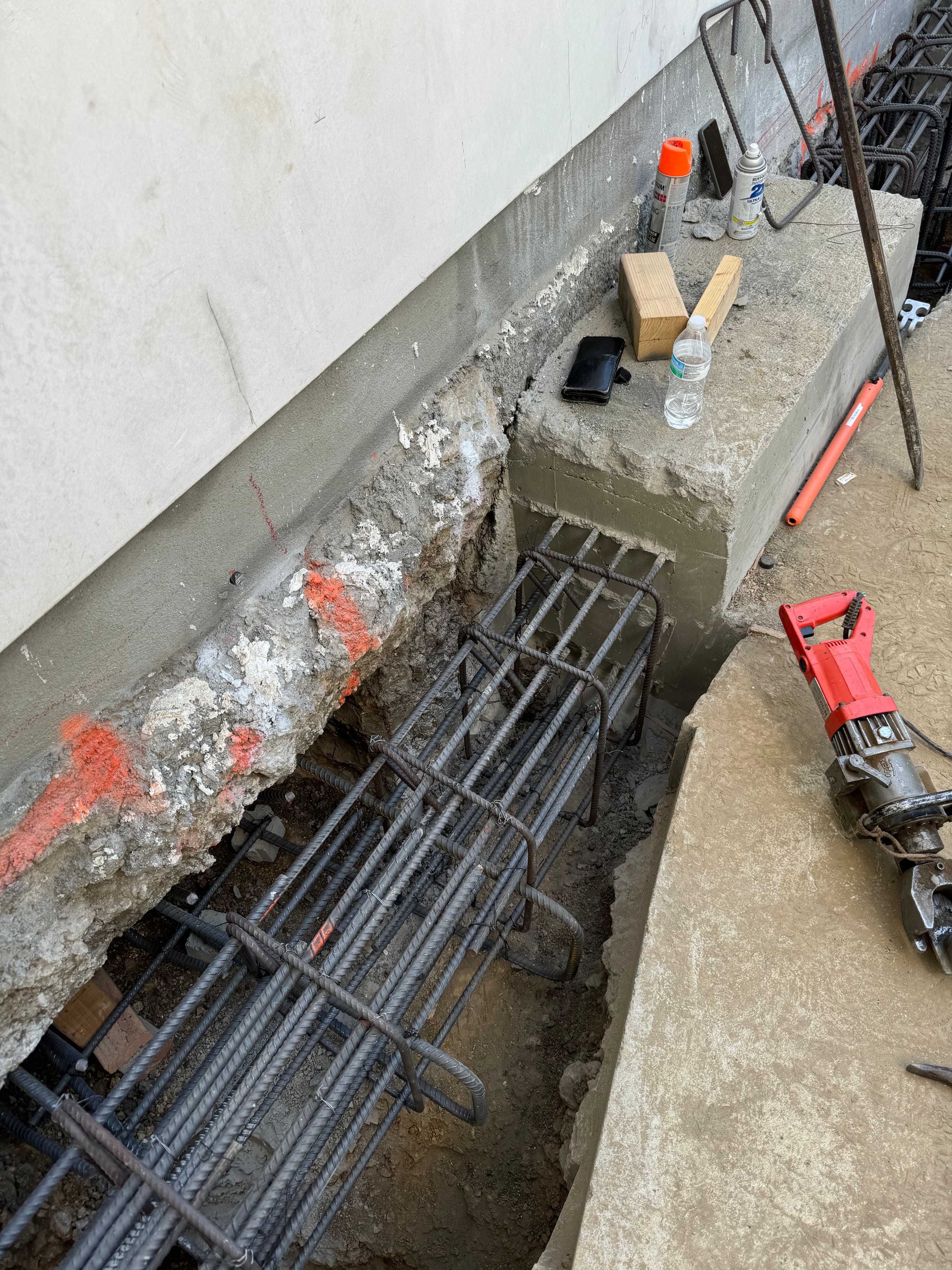
If your home or commercial building is showing signs of foundation distress - cracks in walls, sticking doors, uneven floors, or visible settling - concrete underpinning may be exactly what you need. In Los Angeles, Santa Clarita, and throughout the San Fernando Valley, foundation problems are more common than most property owners realize, and underpinning is one of the most effective long-term solutions available.
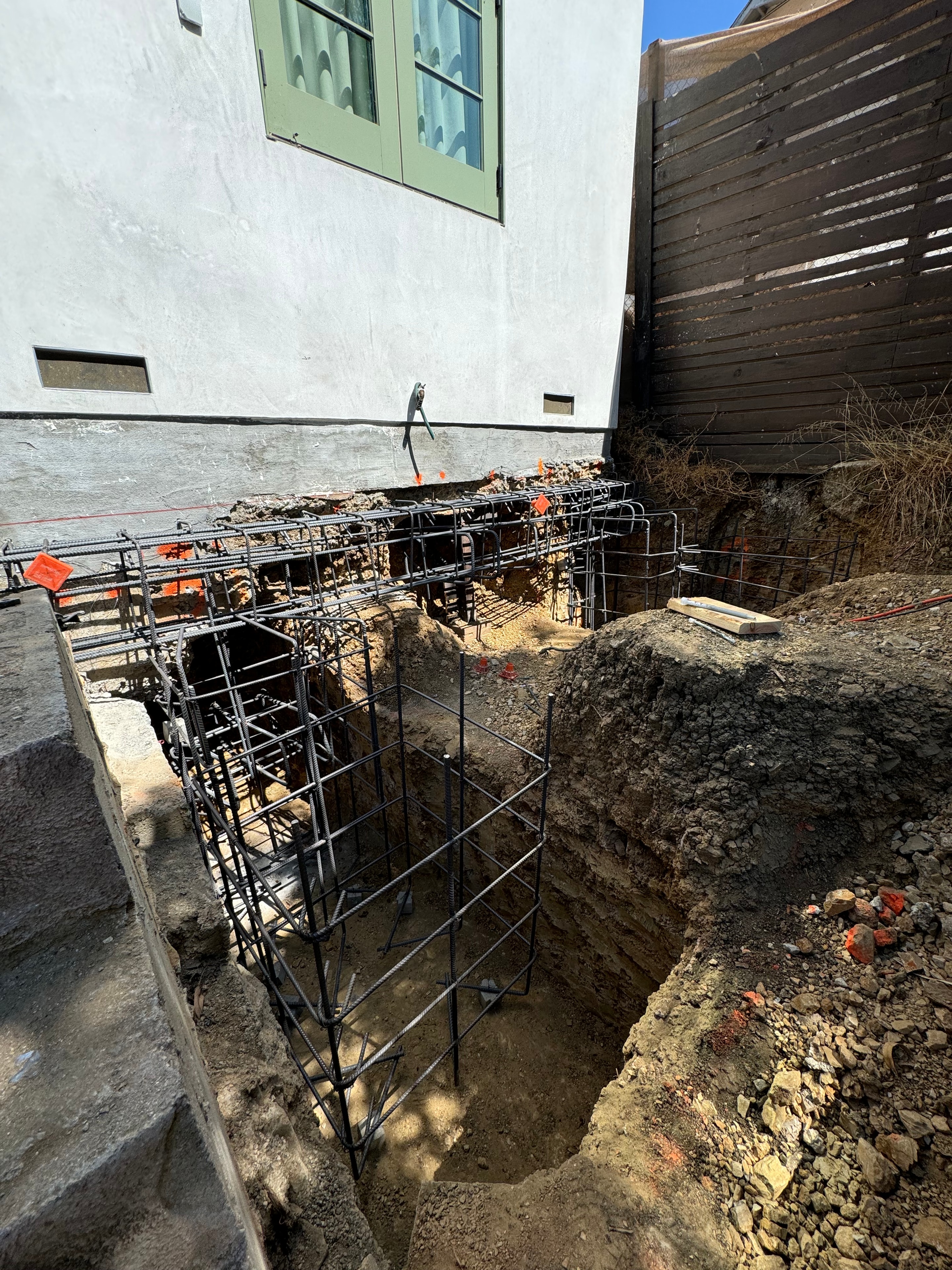
What Is Concrete Underpinning?
Concrete underpinning is the process of strengthening and stabilizing an existing foundation by extending it deeper into the ground or widening its footprint. The goal is to transfer the structural load of the building to a more stable soil layer or to increase the bearing capacity of the existing foundation.
Unlike surface-level repairs that mask symptoms, underpinning addresses the root cause of foundation failure. It is a permanent structural solution - not a patch.
Why Los Angeles Foundations Need Underpinning
Los Angeles County presents a unique combination of conditions that make foundation problems particularly common:
- Expansive Clay Soils: Much of the San Fernando Valley, Santa Clarita, and surrounding areas sit on clay-rich soils that swell when wet and shrink when dry. This constant movement puts enormous stress on foundations over time.
- Seismic Activity: Southern California earthquakes - even minor ones - can shift soil and compromise foundations that were not originally designed to handle lateral forces.
- Hillside and Sloped Lots: Properties in areas like Hollywood Hills, Bel Air, and parts of Santa Clarita are built on slopes where soil creep and erosion can gradually undermine foundation support.
- Aging Construction: Many homes and commercial buildings throughout Los Angeles County were built decades ago to older code standards. As soil conditions change and loads increase, original foundations may no longer be adequate.
- Water Intrusion and Erosion: Poor drainage, broken irrigation lines, and heavy rain events can erode soil beneath footings, creating voids that lead to settlement and cracking.
- New Construction Adjacent to Existing Structures: When new construction or excavation occurs near an existing building, the neighboring foundation may require underpinning to maintain stability.
Warning Signs Your Foundation May Need Underpinning
Not every crack or settlement issue requires underpinning, but these warning signs warrant a professional evaluation:
Diagonal Wall Cracks
Cracks running at 45-degree angles from window and door corners are a classic sign of differential settlement.
Sticking Doors and Windows
When frames shift out of square, doors and windows no longer open and close properly.
Uneven or Sloping Floors
Floors that slope noticeably or feel bouncy in certain areas may indicate foundation movement.
Gaps at Ceiling or Floor Junctions
Separation between walls and ceilings or floors suggests the structure is moving.
Visible Foundation Cracks
Horizontal cracks in concrete or block foundations are especially serious and require immediate attention.
Basement or Crawl Space Water Intrusion
Water entering below grade often indicates compromised foundation integrity.
The Concrete Underpinning Process
At Concrete Etc., Inc., our underpinning process is methodical and engineered for long-term performance:
- Site Assessment and Engineering Review: We begin with a thorough evaluation of the existing foundation, soil conditions, and structural loads. For most underpinning projects, a structural engineer is involved to specify the scope and design.
- Excavation in Controlled Sections: We excavate beneath the existing footing in carefully sequenced sections - never undermining the entire foundation at once. This controlled approach prevents additional settlement during the repair process.
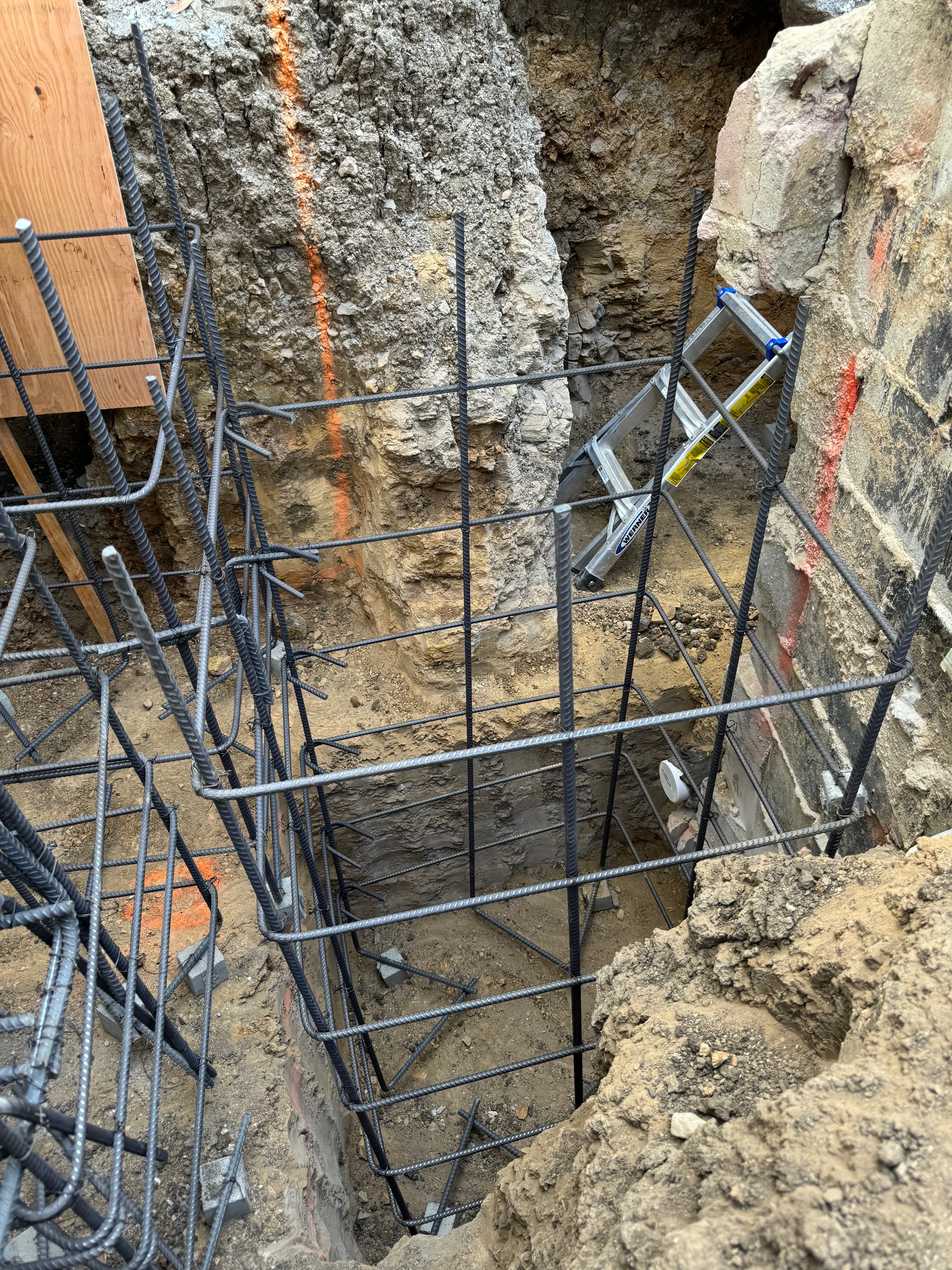
- Rebar Placement and Formwork: Heavy steel reinforcement is placed within the excavated sections to tie the new concrete to the existing foundation and provide structural continuity.
- Concrete Pouring and Curing: High-strength concrete is poured into each section and allowed to cure fully before adjacent sections are excavated. This staged approach maintains structural support throughout the project.
- Backfill and Compaction: Once all underpinning sections are complete and cured, the excavated areas are backfilled with compacted material to restore grade and drainage.
- Final Inspection: We conduct a final walkthrough to verify the work meets structural specifications and all areas are properly restored.
Underpinning vs. Other Foundation Repair Methods
Underpinning is one of several foundation repair approaches. Here is how it compares to common alternatives:
- Concrete Underpinning: Best for: significant settlement, adjacent excavation, load increases, and situations requiring a permanent structural solution. Highly durable and code-compliant.
- Helical or Push Piers: Best for: deep soil instability where piers can reach bedrock or stable strata. Often used when access is limited. More expensive per linear foot.
- Slab Lifting (Mudjacking): Best for: minor slab settlement on flat surfaces. Not a structural solution for failing footings or stemwalls.
- Carbon Fiber Straps: Best for: bowing basement walls. Does not address settlement or bearing capacity issues.
The right solution depends on your specific soil conditions, foundation type, and the extent of the problem. A proper site evaluation is essential before committing to any repair method.
How Much Does Foundation Underpinning Cost in Los Angeles?
Foundation underpinning costs in Los Angeles vary widely depending on the scope of work, soil conditions, access constraints, and the extent of the foundation distress. Factors that influence cost include:
- Linear Footage: Underpinning is typically priced per linear foot of foundation treated. More perimeter means higher cost.
- Depth Required: Deeper underpinning to reach stable soil requires more excavation, concrete, and labor.
- Access and Site Conditions: Tight access, hillside lots, and existing landscaping can increase labor costs.
- Engineering Requirements: Projects requiring structural engineering plans and city permits add to the overall cost but are often required for permitted work.
- Scope of Damage: Foundations with significant cracking or displacement may require additional repair work beyond underpinning alone.
The best way to get an accurate cost is an onsite evaluation. We assess the foundation, discuss your goals, and provide a detailed scope of work before any commitment is made.
Licensed for Foundation Work Throughout Los Angeles County
Concrete Etc., Inc. holds CSLB License #895899 with B (General Building), C8 (Concrete), and C29 (Masonry) classifications. We are fully qualified for residential and commercial foundation underpinning, stemwall repair, and structural concrete work throughout Los Angeles County.
Serving Los Angeles County for Foundation Underpinning
We provide concrete underpinning and foundation repair services throughout Los Angeles County, including Los Angeles County, Santa Clarita, Altadena, Pasadena, Brentwood, Bel Air, Hollywood Hills, and the entire San Fernando Valley. If your foundation is showing signs of distress, do not wait - early intervention is almost always less costly than delayed repair.
Foundation Problems? Let's Talk.
We evaluate foundations throughout Los Angeles County and provide honest, detailed assessments. No pressure - just answers.
Schedule an Onsite Consultation